
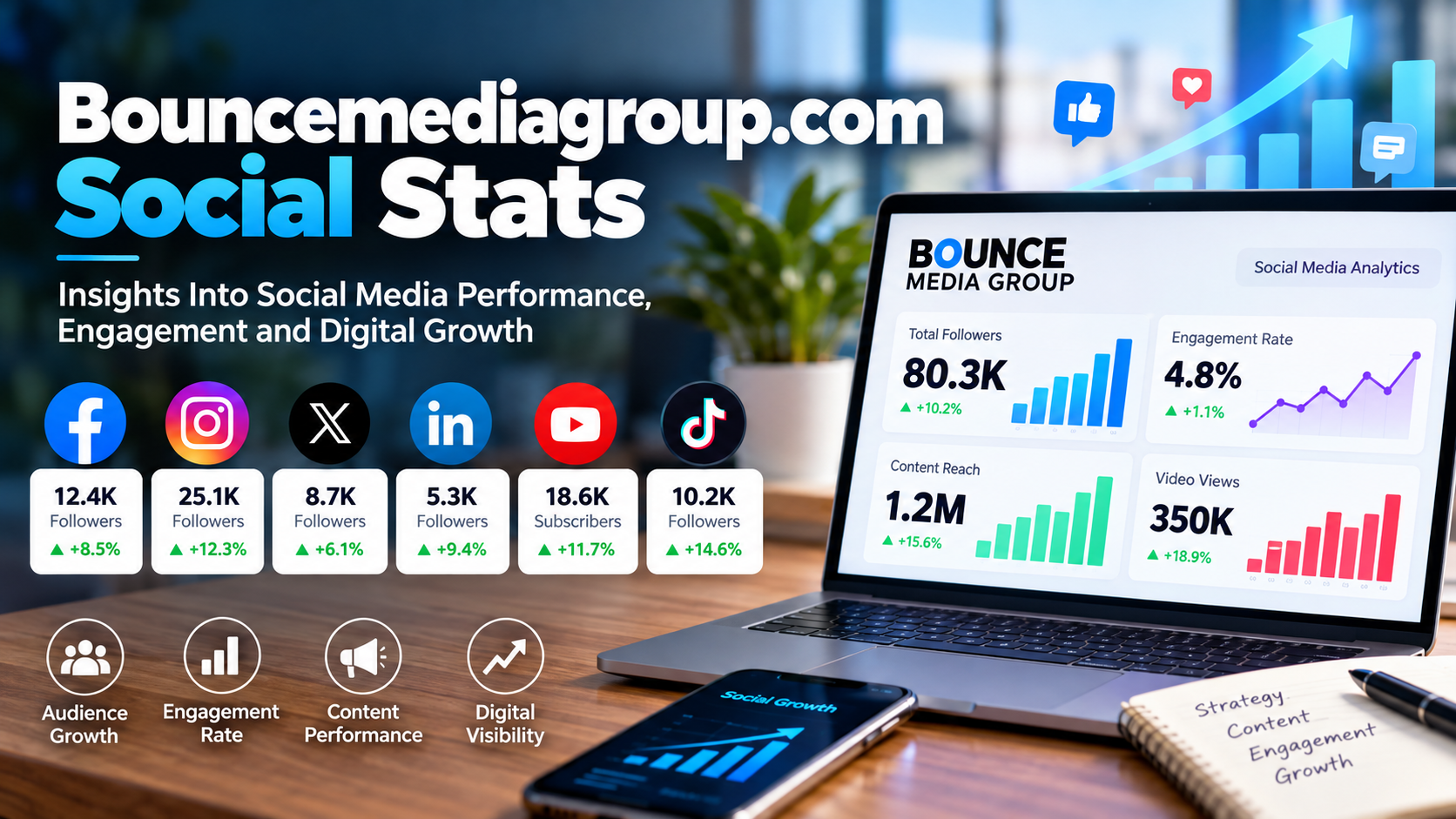
Social media has become an essential part of modern digital communication, helping businesses, publishers, and content creators connect with audiences across multiple platforms. The search term bouncemediagroup.com social stats reflects an interest in understanding the social media performance, audience engagement, online visibility, and digital reach associated with Bounce Media Group. These measurements can provide valuable insights into how effectively a brand communicates with its followers and builds its online presence.
However, understanding social media statistics requires more than looking at follower counts or the number of likes on a post. Meaningful analysis involves engagement rates, audience growth, content performance, platform activity, and the reliability of available information. This guide explains what bouncemediagroup.com social stats may refer to, which metrics matter most, how to evaluate social media performance, and what readers should consider before drawing conclusions about the brand’s digital influence.
What Is Bouncemediagroup.com Social Stats?
Bouncemediagroup.com social stats is a search phrase associated with the social media presence and performance of Bounce Media Group. In general, social statistics describe measurable activity across platforms such as Facebook, Instagram, LinkedIn, YouTube, and X. These measurements help explain how audiences discover content, interact with posts, and respond to a brand’s online communication.
It is important to distinguish the search phrase from a verified analytics product. Publicly confirmed information is insufficient to establish that bouncemediagroup.com operates a dedicated social statistics dashboard or provides a specific set of proprietary analytics tools. Therefore, the term is best understood as a reference to social media performance information associated with the website rather than evidence of an officially available analytics service.
Understanding the Purpose of Social Statistics
Social media statistics help businesses understand the relationship between their published content and audience behavior. Instead of relying entirely on impressions or assumptions, organizations can evaluate measurable signals such as comments, shares, views, follower changes, and interactions.
For a media-related brand, these indicators are especially useful because audience attention is closely connected to content distribution. A post that generates meaningful discussion may offer more insight into audience interest than one that simply receives a large number of views.
Background and Digital Presence of Bounce Media Group
The name Bounce Media Group suggests an association with media, publishing, or digital communication. However, a brand name alone cannot establish a company’s exact business model, ownership, services, or operating history. Those details require confirmation through reliable company information and official sources.
When examining the digital presence associated with bouncemediagroup.com, readers should consider how the website connects with external social platforms. Official profile links, consistent branding, recognizable contact information, and matching website references can help establish whether particular social accounts genuinely belong to the organization.
Why an Online Presence Matters
A recognizable digital presence allows audiences to discover a brand through search engines, social networks, shared articles, and recommendations. For organizations involved in media or content distribution, maintaining consistent communication across these channels can improve discoverability and strengthen audience relationships.
However, simply having accounts on several platforms does not demonstrate successful digital marketing. Account activity, audience relevance, posting consistency, and the quality of engagement provide a more useful picture of performance. These factors are important when evaluating social statistics connected with any media organization.
Key Metrics Used to Evaluate Bouncemediagroup.com Social Stats
Social media performance is usually evaluated through several complementary metrics. Each provides a different perspective on audience behavior, and no single number can accurately represent an entire digital presence.
Follower Count and Audience Growth
Follower count represents the number of accounts subscribed to or following a particular social media profile. It is one of the most visible indicators of audience size, but it does not necessarily reflect how many people regularly view or interact with published content.
Audience growth provides additional context by showing how follower numbers change over time. Consistent growth may indicate increasing interest, while sudden fluctuations require further investigation. Changes can result from successful campaigns, platform adjustments, inactive-account removals, or other factors.
Engagement Rate and Audience Interaction
Engagement measures how people respond to social content through actions such as likes, comments, shares, saves, and other platform-specific interactions. Engagement rate expresses these interactions relative to a defined audience or exposure measure.
One common calculation is:
Engagement Rate = (Total Engagements ÷ Total Followers) × 100
This follower-based formula is useful for certain comparisons, but engagement can also be calculated using reach, impressions, or views. Different calculation methods produce different results, so comparisons should use the same formula and reporting period.
Reach, Impressions, and Content Views
Reach generally describes the number of unique accounts or users exposed to content, while impressions represent the total number of times content was displayed. A person may generate multiple impressions but typically counts once toward reach within the same reporting period.
Views are another important metric, particularly for video-based platforms. However, platforms may define qualifying views differently. This makes it necessary to understand each platform’s reporting standards before comparing video performance across multiple social networks.
Social Media Platforms and Their Performance Indicators
Different social networks emphasize different forms of interaction. As a result, the most useful performance indicators depend on the platform, content format, and intended audience.
The following table explains commonly used social media metrics. It is a general comparison, not a report of verified Bounce Media Group account statistics.
| Social Platform | Important Metrics | Main Analytical Purpose |
|---|---|---|
| Reach, reactions, comments, shares | Evaluate community engagement and content distribution | |
| Reach, saves, shares, Reel views | Measure visual content performance and audience interest | |
| Impressions, reactions, comments, follower growth | Assess professional audience engagement | |
| YouTube | Views, watch time, subscribers, audience retention | Understand video performance and viewer interest |
| X | Impressions, reposts, replies, profile visits | Evaluate conversation and content visibility |
| TikTok | Video views, shares, comments, watch time | Assess short-form video engagement |
Understanding Platform Differences
A strong result on one platform does not automatically indicate similar performance elsewhere. Instagram audiences may respond more actively to visual storytelling, while LinkedIn users may engage with professional insights, company announcements, and industry discussions.
For anyone researching bouncemediagroup.com social stats, platform-specific analysis is therefore more informative than combining every interaction into one overall number. Separate reporting makes it easier to identify where content performs effectively and where improvements may be needed.
How Social Media Statistics Help Measure Digital Growth
Digital growth involves more than attracting new followers. It also includes developing audience relationships, increasing meaningful visibility, and encouraging users to take actions that support broader communication or business objectives.
Social media statistics help organizations determine whether their content strategy is producing these outcomes. By examining changes over time, analysts can identify recurring patterns, understand audience preferences, and evaluate the impact of different publishing approaches.
Measuring Content Effectiveness
Content effectiveness can be assessed through interactions, completion rates, shares, click-through rates, and other indicators relevant to the publishing goal. Educational articles may generate link clicks, while entertaining videos may encourage sharing or repeat viewing.
These differences matter because a successful post should be judged against its intended purpose. A brand-awareness campaign may prioritize reach, while a website traffic campaign may focus on qualified clicks and visits.
Identifying Long-Term Trends
Comparing statistics over several weeks or months helps distinguish sustained progress from temporary spikes. A single popular post may attract substantial attention without producing lasting audience growth.
Long-term analysis can reveal whether engagement remains consistent, whether followers continue returning, and whether content performance improves after strategic changes. This approach provides a more dependable foundation for evaluating a brand’s digital development.
Benefits of Monitoring Social Media Performance
Monitoring social statistics can improve decision-making for businesses, publishers, marketing professionals, and content creators. Reliable measurements allow teams to identify which activities deserve continued investment and which may require adjustment.
The value of analytics becomes greater when statistics are connected to clearly defined objectives. Rather than collecting numbers without context, organizations can use performance data to improve content quality, audience communication, and resource allocation.
Improving Audience Understanding
Audience interactions can reveal the topics, formats, and publishing styles that attract the most attention. Comments may identify recurring questions, while shares and saves can indicate that users consider certain content useful.
These observations can help shape future editorial decisions. Nevertheless, engagement data represents only part of an audience’s behavior and should not be treated as a complete explanation of user preferences.
Supporting Marketing Decisions
Social analytics can help marketers compare campaigns, evaluate promotional content, and identify opportunities for improvement. When reliable conversion tracking is available, social activity can also be connected to website visits, inquiries, or other measurable outcomes.
This creates a clearer relationship between social media activity and business performance. It also helps prevent decisions based solely on impressive-looking follower totals or isolated engagement numbers.
How to Check Bouncemediagroup.com Social Stats
Readers interested in checking social statistics associated with bouncemediagroup.com should begin by identifying the organization’s authentic social media accounts. Official website references, verified account details where available, and consistent branding can help establish whether a profile is connected to the intended organization.
Once the relevant accounts have been identified, publicly visible information can provide an initial overview. Follower totals, posting frequency, recent interactions, and content formats may be available without administrative access. More detailed measurements generally require authorized access to the account’s analytics tools.
Using Native Social Media Analytics
Major social media platforms provide built-in reporting tools for eligible account owners and administrators. These tools may include reach, impressions, audience information, engagement, and content-specific performance data.
Native analytics are usually more suitable for examining an account’s internal performance because they can provide measurements unavailable to ordinary visitors. However, access permissions, account types, and platform reporting definitions affect which data can be viewed.
Using Third-Party Analytics Services
Third-party social media analytics services may help organize publicly available information, compare profiles, or monitor performance trends. Their usefulness depends on the platform integrations, data sources, and measurement methods they support.
Readers should avoid assuming that every external analytics service has access to complete or real-time statistics. Some services rely on estimates, limited public data, or periodic updates, which can create differences between their reports and official platform measurements.
Accuracy, Credibility, and Limitations of Social Statistics
One of the most important considerations when researching bouncemediagroup.com social stats is the credibility of the information being presented. Social media numbers can change frequently, and figures published without dates, sources, or calculation methods may be difficult to interpret.
At the time of writing, no independently verified, current follower counts, engagement rates, or platform-by-platform performance figures are established in this article for Bounce Media Group. Presenting estimated numbers as confirmed results would risk misleading readers.
Public Statistics Versus Private Analytics
Public statistics usually include visible follower counts and certain engagement totals. Private analytics can contain more detailed information, including audience demographics, unique reach, traffic attribution, and campaign performance.
Because these data sources differ, a third-party observer cannot always reproduce the measurements available to an account administrator. Readers should distinguish between publicly observable activity and statistics requiring authorized access.
Why Social Media Numbers Can Be Misleading
Large follower totals do not necessarily indicate a highly engaged audience. Accounts may attract followers who rarely interact, while smaller communities can generate substantial discussion and consistent participation.
Other limitations include automated interactions, paid promotion, changes in platform algorithms, and differences in reporting periods. These factors can affect apparent performance and should be considered before comparing brands or making marketing decisions.
Practical Ways to Improve Social Media Engagement
Improving social media performance requires a strategy based on audience needs, useful content, and consistent evaluation. While analytics reveal what has happened, they do not automatically explain why particular posts succeed or fail.
For a media-focused organization, meaningful improvements may involve publishing original information, responding to audience questions, improving visual presentation, and selecting formats appropriate for each platform. Testing different approaches can help identify effective methods without relying on assumptions.
Creating Relevant and Valuable Content
Content that addresses genuine audience interests is more likely to encourage meaningful interaction. Clear explanations, informative updates, useful visuals, and timely discussions can provide reasons for users to engage with a brand.
Quality also matters for long-term credibility. Publishing accurate information, avoiding exaggerated claims, and maintaining consistent editorial standards can support audience trust beyond short-term engagement figures.
Reviewing Performance Regularly
Regular performance reviews help identify trends and evaluate whether content changes are producing measurable improvements. Weekly reviews may support day-to-day publishing decisions, while monthly or quarterly comparisons can provide broader strategic insights.
The review process should include consistent definitions and comparable reporting periods. For example, engagement rates calculated using follower counts should not be directly compared with rates calculated using impressions without clearly explaining the difference.
What the Future of Social Media Analytics Means for Digital Brands
Social media analytics continues to evolve as platforms introduce new content formats, reporting methods, and audience measurement capabilities. Video engagement, audience retention, content sharing, and conversion-related indicators are increasingly important considerations for organizations evaluating their digital performance.
Artificial intelligence and automated reporting tools may also make it easier to organize large amounts of performance information. However, automated interpretations still require human judgment, particularly when distinguishing correlation from causation or assessing the reliability of underlying data.
The Importance of Meaningful Metrics
Future social media evaluation is likely to remain focused on the quality of audience interactions rather than follower totals alone. Metrics such as meaningful engagement, returning viewers, qualified website traffic, and measurable outcomes can provide a more complete understanding of performance.
For readers researching bouncemediagroup.com social stats, the most useful approach is to prioritize transparent data sources, consistent measurements, and relevant performance indicators. These principles remain valuable regardless of how individual social media platforms change.
Frequently Asked Questions (FAQs)
1. What does bouncemediagroup.com social stats mean?
Bouncemediagroup.com social stats refers to information about social media activity and performance associated with Bounce Media Group. It may involve follower numbers, engagement, reach, impressions, content interactions, and audience growth. The phrase does not, by itself, establish the existence of an official analytics dashboard.
2. Where can I find Bounce Media Group’s social media statistics?
You can begin by identifying social media profiles officially associated with bouncemediagroup.com and examining their publicly visible activity. Detailed metrics such as unique reach, audience demographics, and conversion information may require authorized access to the relevant platform’s analytics tools.
3. Are bouncemediagroup.com social stats publicly available?
Some statistics may be publicly visible on associated social profiles, depending on the platform and account settings. However, comprehensive analytics are generally not available to outside observers. Current verified figures have not been established here, so readers should avoid relying on unsourced numerical claims.
4. Why is engagement rate important in social media analysis?
Engagement rate helps explain how actively an audience interacts with content relative to a chosen measurement base. It can provide useful context beyond follower totals, although results depend on the formula, platform, content type, and reporting period used.
5. Can social media statistics help evaluate a brand’s credibility?
Social statistics can provide supporting evidence about audience activity and communication consistency, but they cannot independently prove credibility. A trustworthy evaluation should also consider accurate company information, authentic account ownership, transparent communication, content quality, and other independently verifiable details.
Conclusion
Understanding bouncemediagroup.com social stats involves examining the broader relationship between social media visibility, audience engagement, and digital performance. Metrics such as follower growth, reach, impressions, engagement rates, and content interactions can provide useful information when their sources and calculation methods are clear. However, the available evidence does not establish specific current performance figures or confirm that Bounce Media Group offers a dedicated public analytics service. Readers should therefore distinguish verified account activity from assumptions or unsupported claims.
For businesses, marketers, and readers interested in social media performance, the most effective approach is to evaluate multiple metrics together and consider the context behind each result. Reliable analytics, consistent reporting periods, authentic account identification, and careful interpretation can reveal more than isolated numbers. By applying these principles, readers can assess the digital presence associated with bouncemediagroup.com more responsibly and develop a stronger understanding of social media performance in general.